
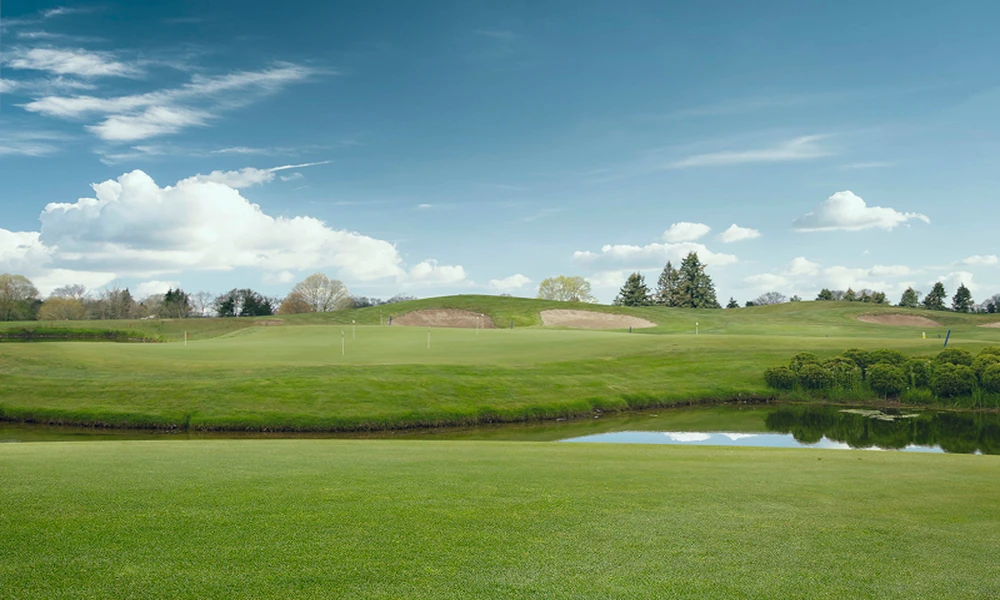
A golfer who plays the same home course every weekend can find their game genuinely rattled the first time they step onto something different. Terrain, vegetation, and ground conditions vary enormously between course styles, and each one rewards a slightly different approach, sometimes right down to what’s on your feet.
Links Courses: Wind, Firm Ground, and Few Trees
Originating on the coastlines of Scotland, links courses are typically open, windswept, and built on sandy, firm ground with few trees to block the elements. Shots tend to run further than expected on the hard turf, and low, controlled ball flight generally beats a high, soft landing approach that wind can easily push off course. Bunkers here also tend to be deep and unforgiving, punishing anything slightly off target.
Reading the wind correctly matters as much as club selection on a links course, since even a well-struck shot can drift significantly off line once it leaves the clubface.
Parkland Courses: Trees, Rough, and Shot-Shaping Demands
Parkland courses sit at the opposite end of the spectrum, lush, tree-lined, and often modelled after traditional countryside estates. Fairways are narrower and more defined, rough grows thicker, and shot-shaping around trees becomes a regular part of course management rather than an occasional challenge. Softer ground here generally rewards a higher, softer approach shot that the firmer links terrain doesn’t.
This softer turf also means divots and ball marks behave differently, something golfers used to firmer courses sometimes underestimate until their approach shots plug rather than release.
Desert Courses: Heat, Elevation Shifts, and Sparse Landing Zones
Desert courses introduce a different set of demands entirely: target-style fairways surrounded by natural desert terrain, dramatic elevation changes, and heat that affects both stamina and ball flight. Traction becomes a genuine concern on these courses too, since sandy, uneven terrain off the fairway calls for footwear that can actually grip. Proper golf shoes for men built with reliable traction make a real difference here, particularly on sloped or loose ground near desert-style hazards.
What Actually Changes From Course to Course
A handful of practical adjustments tend to matter most when moving between course styles, and getting them wrong usually shows up in the scorecard before anything else:
- Ball flight strategy shifts between low, wind-resistant shots and higher, softer approaches depending on terrain.
- Footwear needs change with ground surface, from firm coastal turf to loose desert sand to steep mountain slopes.
- Club selection off the tee often adjusts based on how much fairway width and rough severity a course presents.
- Pre-round planning matters more on unfamiliar terrain, since local knowledge can’t be relied on the way it can at a home course.
None of these adjustments requires relearning the swing itself, just a willingness to rethink strategy before the round starts rather than midway through the front nine.
Mountain and Resort Courses: Elevation and Undulation
Mountain courses add elevation changes that affect club distance in ways flat courses never require golfers to consider, while resort courses often combine dramatic scenery with genuinely tricky, undulating terrain designed as much for visual impact as for challenge. Stability matters more on these uneven surfaces, which is where supportive women’s golf shoes built for lateral support genuinely earn their keep, especially across a full round on sloped fairways.
Altitude itself changes ball flight too; thinner mountain air means shots often carry further than expected, which throws off distance judgement for anyone used to sea-level courses.
The Short Version
- Links courses reward low, controlled shots that hold up against coastal wind.
- Parkland courses demand more precise shot-shaping around trees and thicker rough.
- Desert and mountain courses both introduce terrain and elevation challenges that standard footwear struggles with.
- Footwear suited to the specific course type makes a measurable difference in stability and traction.
Every course type is really just asking a different question of the same golfer. Answering it well has less to do with raw skill and more to do with recognising which question is actually being asked that day.
The golfer who adjusts their approach and their footwear to match the terrain tends to have a noticeably steadier round than the one who plays every course exactly the same way.
Find footwear suited to whichever terrain you’re playing next at Leonian. Browse our collections today!